
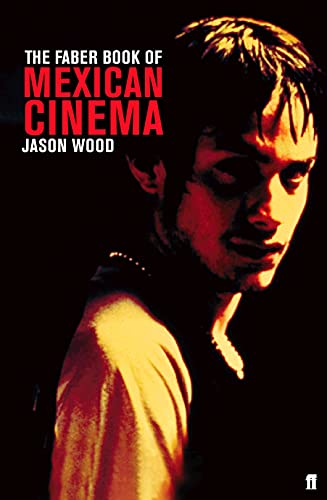
The Faber book of Mexican cinema / Jason Wood.
Material type: TextLanguage: eng Publication details: London : Faber and Faber, 2006.Description: xiii, 196 p. : ill. ; 24 cmISBN:
 - 9780571217328
- 057121732X
- Book of Mexican cinema
- Mexican cinema
- 791.430972
- PN 1993.5 W876f 2006
| Item type | Current library | Home library | Collection | Shelving location | Call number | Copy number | Status | Barcode | |
|---|---|---|---|---|---|---|---|---|---|
 Libro
Libro
|
Biblioteca Juan Bosch | Biblioteca Juan Bosch | Humanidades | Humanidades (4to. Piso) | PN 1993.5 W876f 2006 (Browse shelf(Opens below)) | 1 | Available | 00000144150 |
Browsing Biblioteca Juan Bosch shelves, Shelving location: Humanidades (4to. Piso), Collection: Humanidades Close shelf browser (Hides shelf browser)

|

|

|

|

|

|

|
||
| PN 1993.5 W597c 2018 The classics : the greatest Hollywood films of the 20th century / | PN 1993.5 W873c 2007 Contemporary European cinema | PN 1993.5 W873n 2015 New British cinema from Submarine to 12 Years a Slave : the resurgence of British film-making / | PN 1993.5 W876f 2006 The Faber book of Mexican cinema / | PN 1993.5 W876o 2009 100 American independent films / | PN 1993.5 W877i 2005 Italian cinema / | PN 1993.5 Y78m 1992 Movies for the masses : popular cinema and Soviet society in the 1920s / |
Includes bibliographical references (p. 187-188) and index.
Front matter --
1. 'Golden Age', El Grupo Nuevo Cine, Boom and Bust --
2. Another 'New Mexican Cinema': 1989-94 --
3. Adventures in Hollywood, and More Generational Stirrings --
4. The Making of Amores Perros --
5. Y tu mamá también and The Devil's Backbone --
6. Japón, El crimen del padre Amaro, Nicotina, and El Misterio del Trinidad --
7. 21 Grams and Hellboy --
8. The State of Things --
Back matter
"The international successes of Amores Perros and Y tu mamá también alerted the eyes of the world to the riches to be found in Mexican cinema, from the talents of directors Alejandro González Iñárritu and Alfonso Cuarón to the poster-boy looks and electrifying screen presence of Gael García Bernal. Their rise to prominence, abetted by a new entrepreneurial spirit amongst Mexican financiers and producers, coincided with an emerging generation of Mexican cinemagoers thirsting for intelligent, identity-affirming, locally made product. Having endured a period of relative famine throughout the eighties and nineties, Mexican audiences once more had a national cinema to shout about, and the global audience and Hollywood too have had to sit up and take notice."
There are no comments on this title.