
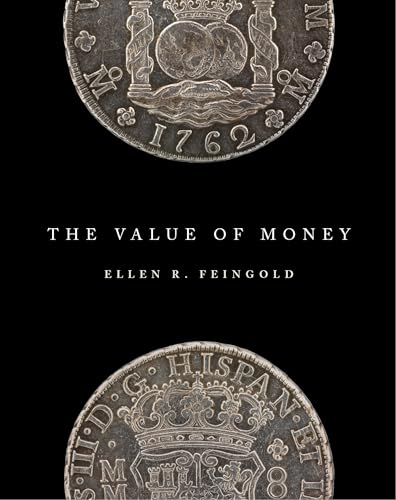
The value of money / Ellen R. Feingold.
Material type: TextLanguage: English Publisher: Washington, D.C. : Smithsonian Institution Scholarly Press, 2015Description: xv, 155 pages : illustrations (chiefly color) ; 27 cmContent type:
 - text
- unmediated
- volume
- 9781935623809 (cloth : alkaline paper)
- National Numismatic Collection (U.S.) -- Catalogs
- Numismatics -- Exhibitions
- Numismática
- Money -- Exhibitions
- Dinero
- Coins -- Exhibitions
- Monedas
- Paper money -- Exhibitions
- Billetes de banco
- Coins -- History -- Exhibitions
- Money -- History -- Exhibitions
- Coins -- Collectors and collecting -- Exhibitions
- Money -- Collectors and collecting -- Exhibitions
- 737
- CJ 41 F299v 2015
| Item type | Current library | Home library | Collection | Shelving location | Call number | Copy number | Status | Barcode | |
|---|---|---|---|---|---|---|---|---|---|
 Libro
Libro
|
Biblioteca Juan Bosch | Biblioteca Juan Bosch | Recursos Regionales | Recursos Regionales (2do. Piso) | CJ 41 F299v 2015 (Browse shelf(Opens below)) | 1 | Available | 00000162832 |
"A Smithsonian contribution to knowledge."
Includes bibliographical references (pages 141-145) and index.
The Origins of Money -- The Innovations of Money -- The Messages of Money -- The Artistry of Money -- The Allure of Money -- New Research Trajectories and Collecting Initiatives -- Further Reading on Selected Topics and Objects.
"The Value of Money celebrates the power of using monetary objects to explore history. This richly illustrated book features over 175 objects from the Smithsonian National Museum of American History's National Numismatic Collection. With objects from every inhabited continent, spanning more than 2,600 years, this book showcases the National Numismatic Collection's unique strengths, including the geographic and chronological diversity of the collection and the stunning rarities it contains. The companion volume to a major exhibition of the same name, this book examines the origins of money, new monetary technologies, the political and cultural messages money conveys, numismatic art and design, and the practice of collecting money. The Value of Money connects American history to global histories of exchange, cultural interaction and expression, political change, and innovation"-- Provided by publisher.
"The story of money is a global one. For thousands of years, communities around the world have designated objects to represent value and facilitate transactions. Objects that at first seem to have no relationship to one another--tiny metal discs, massive stones, and colorful seashells--have become associated through their use as money, connecting them, and the communities that used them, through this shared aspect of human history. The practice of collecting monetary objects, both by individuals and museums, has brought together a vast range of material and created 'money collections,' where local and national histories can be compared in the context of wider global histories. The National Numismatic Collection, the Smithsonian Institution's collection of money, is one of those collections"-- Provided by publisher.
There are no comments on this title.