
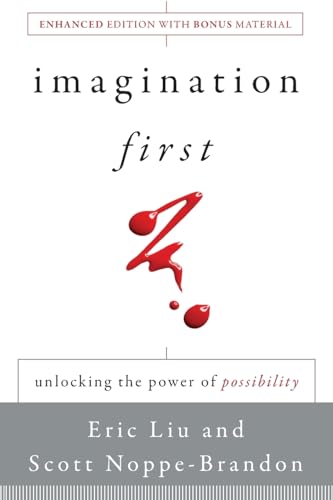
Imagination first : unlocking the power of possibility / Eric Liu and Scott Noppe-Brandon.
Material type: TextLanguage: English Publication details: San Francisco : Jossey-Bass, c2009.Edition: 1st edDescription: xx, 228 pages ; 22 cmISBN:
 - 9781118013687 (paper)
- 1118013689 (paper)
- 9780470382486 (cloth)
- 0470382481 (cloth)
- 153.3
- BF 408 L783i 2009
| Item type | Current library | Home library | Collection | Shelving location | Call number | Copy number | Status | Barcode | |
|---|---|---|---|---|---|---|---|---|---|
 Libro
Libro
|
Biblioteca Juan Bosch | Biblioteca Juan Bosch | Humanidades | Humanidades (4to. Piso) | BF 408 L783i 2009 (Browse shelf(Opens below)) | 1 | Available | 00000174189 |
Includes bibliographical references and index.
Acknowledgments. Lincoln Center Institute. The Authors. Part One: The Premise. Introduction. What, Why, and How. Part Two: The Practices. 1. Make Mist. Ready, get still, go. 2. Leave the Campfire. Know your enemy: it is you, scared. 3. Flip What's Foolish. Make it wise to be foolish, and every fool will generate wisdom. 4. Make Way for Awe. Nurture humility and the wonder that comes with it. 5. Reinvent the Wheel. Be willing to give back the givens. 6. Think Inside the Box. Make greedy, grateful use of limits. 7. Hoard Bits. Collect obsessively; sift; trust that the right bits will emerge. 8. Mix Your Metaphors. Change the metaphors that frame your reality. 9. Renew Your Narrative. Ask whether your story still serves you. 10. Untie Your Tongue. Talk about work with someone who doesn't understand it. 11. Swap Bodies. Lose yourself in a role. 12. Make a Gap. Obscure part of the picture. 12.5. Finish the Story. Make the ending open-ended. 13. hunk It. Show how small it all starts/ 14. Don't Blink. Snap in slow motion; see how you get primed for decision. 15. Cloud Appreciation. Search out ambiguity and sit with it. 16. Spotlight Off, Lantern On. Trade sharp focus for full-field awareness. 17. Play Telephone. Engage in meaning-laundering. 18. Help Out a Boobonian Make every task a quest. 19. Teach Nonzero Math. Expand the pie before dividing it. 20. Microexperiment. Test your hunches playfully. 21. Rewrite History Turn "what would've been" into "what could be". 22. Design for the Hallway. Let informal spaces thrive. 23. Routinize Randomness. Regularly rinse out expectations. 24. Ride the z-axis. Find elemental forms, then play with scale. 25. Challenge Your Challenges. Find better problems. 26. Break the Hand. Unschool yourself periodically. 27. Yes and ... Never say no to an idea. 28. Fail Well. Treat failure like a skill. Part Three: The Purposes. Conclusion. Resources. Index.
This book introduces us to a wide variety of individuals who have learned how to make a habit of imaginative thinking and creative action. It offers a set of universal practices that anyone can use to transform their life at work, home, and play. These 28.5 (yes, that's 28 and a half) practices, with titles like Mix Your Metaphors, Think Inside the Box, and Routinize Randomness, will enable anyone to become more imaginative and to teach others to do so as well--from corporate executive to educator to platoon sergeant.
There are no comments on this title.