
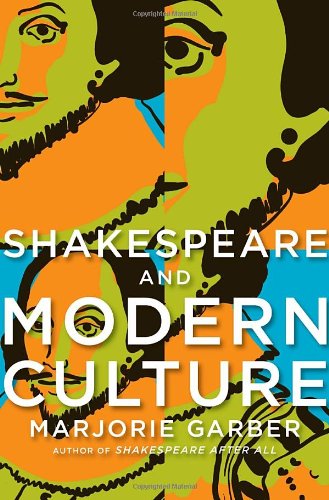
Shakespeare and modern culture / Marjorie Garber.
Material type: TextLanguage: English Publication details: New York : Pantheon Books, 2008.Edition: 1st edDescription: xxxv, 326 pages : illustrations ; 25 cmISBN:
 - 9780307377678
- 0307377679
- 822.3/3
- PR 2989 G213s 2008
| Item type | Current library | Home library | Collection | Shelving location | Call number | Copy number | Status | Barcode | |
|---|---|---|---|---|---|---|---|---|---|
 Libro
Libro
|
Biblioteca Juan Bosch | Biblioteca Juan Bosch | Humanidades | Humanidades (4to. Piso) | PR 2989 G213s 2008 (Browse shelf(Opens below)) | 1 | Available | 00000186882 |
Browsing Biblioteca Juan Bosch shelves, Shelving location: Humanidades (4to. Piso), Collection: Humanidades Close shelf browser (Hides shelf browser)

|

|

|

|

|

|

|
||
| PR 2987 S527M 2008 The Shakespeare Handbook / | PR 2987 S527s 2006 Sparknotes 101 : Shakespeare / | PR 2987 S646c 2012 The Cambridge Shakespeare guide / | PR 2989 G213s 2008 Shakespeare and modern culture / | PR 2991 D973s 2003 Shakespeare and the nature of women / | PR 2993 B655l 2018 Lear : the great image of authority / | PR 2997 W344o 1970 Outlines of Shakespeare's plays / |
Includes bibliographical references and index.
The tempest : the conundrum of man -- Romeo and Juliet : the untimeliness of youth -- Coriolanus : the estrangement of self -- Macbeth : the necessity of interpretation -- Richard III : the problem of fact -- The merchant of Venice : the question of intention -- Othello : the persistence of difference -- Henry V : the quest for exemplarity -- Hamlet : the matter of character -- King Lear : the dream of sublimity.
From one of the world’s premier Shakespeare scholars, author of Shakespeare After All (“the indispensable introduction to the indispensable writer”–Newsweek): a magisterial new study whose premise is “that Shakespeare makes modern culture and that modern culture makes Shakespeare.”
Shakespeare has determined many of the ideas that we think of as “naturally” our own and even as “naturally” true–ideas about human character, individuality and selfhood, government, leadership, love and jealousy, men and women, youth and age. Yet many of these ideas, timely as ever, have been reimagined–are indeed often now first encountered–not only in modern fiction, theater, film, and the news but also in the literature of psychology, sociology, political theory, business, medicine, and law.
Marjorie Garber delves into ten plays to explore the interrelationships between Shakespeare and twentieth century and contemporary culture–from James Joyce’s Ulysses to George W. Bush’s reading list. In The Merchant of Venice, she looks at the question of intention; in Hamlet, the matter of character; in King Lear, the dream of sublimity; in Othello, the persistence of difference; and in Macbeth, the necessity of interpretation. She discusses the conundrum of man in The Tempest; the quest for exemplarity in Henry V; the problem of fact in Richard III; the estrangement of self in Coriolanus; and the untimeliness of youth in Romeo and Juliet.
Shakespeare and Modern Culture is a tour de force reimagining of our own mental and emotional landscape as refracted through the prism of protean “Shakespeare.”
There are no comments on this title.