
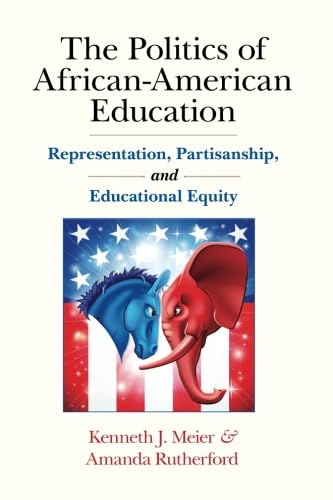
The politics of African-American education : representation, partisanship, and educational equity / Kenneth J. Meier, Texas A&M University and Cardiff University, Amanda Rutherford, Indiana University.
Material type: TextLanguage: English Publisher: New York, NY : Cambridge University Press, 2017Description: xvi, 221 pages : illustrations ; 23 cmContent type:
 - text
- unmediated
- volume
- 9781107512535 (paperback)
- 1107512530 (paperback)
- African Americans -- Education
- Afroamericanos -- Educación
- African Americans -- Education -- Social aspects
- Education -- Political aspects -- United States
- Educación -- Aspectos políticos -- Estados Unidos
- Educational equalization -- United States
- Igualdad educativa -- Estados Unidos
- Academic achievement -- United States
- Rendimiento académico -- Estados Unidos
- Education and state -- United States
- Educación y Estado -- Estados Unidos
- 371.829/96073
- LC 2717 M511p 2017
| Item type | Current library | Home library | Collection | Shelving location | Call number | Copy number | Status | Barcode | |
|---|---|---|---|---|---|---|---|---|---|
 Libro
Libro
|
Biblioteca Juan Bosch | Biblioteca Juan Bosch | Humanidades | Humanidades (4to. Piso) | LC 2717 M511p 2017 (Browse shelf(Opens below)) | 1 | Available | 00000196778 |
Browsing Biblioteca Juan Bosch shelves, Shelving location: Humanidades (4to. Piso), Collection: Humanidades Close shelf browser (Hides shelf browser)


Includes bibliographical references (pages 197-218) and index.
1. Representation, partisanship and equality in education; 2. Two myths: separate but equal and nonpartisan education; 3. The politics of African-American school board representation: partisanship, structure and resources; 4. Race and the street level bureaucrats: with a little help from my friends; 5. Partisanship, teacher representation and access to education opportunities; 6. Race, politics and student learning; 7. Can you beat the ovarian lottery?.
"Based on the 1,800 largest school districts in the United States over a decade, The Politics of African-American Education documents the status of African-American education and the major role that partisanship plays. The book brings together the most comprehensive database on minority education to date that centers around three arguments. First, partisanship permeates African-American education; it affects who is elected to the school board, the racial composition of school administrators and teachers, and the access of African-American students to quality education. Second, African-American representation matters. The effectiveness of African-American representation, however, is enhanced in Democratic districts while representation in Republican districts has little influence. Third, political structures matter, but they are not determinative. Two different structures - election rules and the independent school district - create the rules of the game in US education politics and policy but do not limit others from using those rules to change the outcome"-- Provided by publisher.
There are no comments on this title.