
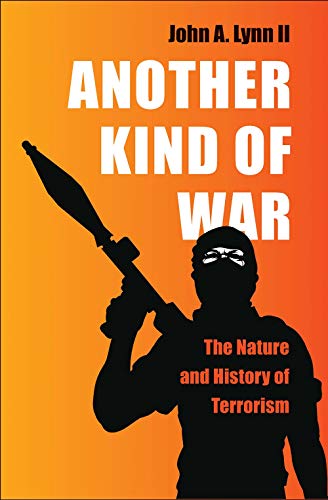
Another kind of war : the nature and history of terrorism / John A Lynn II
Language: eng Publication details: New Haven : Yale University Press, 2019Description: 507 p.; 24 cmISBN:- 9780300188813
- 363.325
- HV 6431 L989a 2019
| Item type | Current library | Home library | Collection | Shelving location | Call number | Copy number | Status | Barcode | |
|---|---|---|---|---|---|---|---|---|---|
 Libro
Libro
|
Biblioteca Juan Bosch | Biblioteca Juan Bosch | Ciencias Sociales | Ciencias Sociales (3er. Piso) | HV 6431 L989a 2019 (Browse shelf(Opens below)) | 1 | Available | 00000143906 |
Includes bibliographical references and index.
On terrorism --
Rule by fear : state-regime terrorism --
War on civilians : military terrorism --
White knights : social terrorism in America, 1865-1965 --
Propaganda of the deed : the first wave of radical terrorism, 1848-1920 --
Second-wave ethno-nationalist terrorism : The FLN and the PIRA --
Tales of two tragedies : Palestinians and Israelis, 1881-1985 --
Urban guerrillas : Marxist terrorism during the 1960s and 1970s --
Islamist terrorism : ideology and radicalization in the third wave --
Regional jihad : Hezbollah and Hamas --
Global jihad : Al-Qaeda and the Islamic State --
Radical right-wing violence in the United States --
Narcoterrorism --
Homeland Security --
Confronting terrorism --
Appendix: A descriptive model of four strategies of terrorism.
"In the years since 9/11, there has been a massive surge in interest surrounding the study of terrorism. This volume applies distinguished military historian John Lynn's lifetime of research and teaching experience to this difficult topic. As a form of violence that implies the threat of future violence, terrorism breeds insecurity, vulnerability, and a desire for retribution that has far-reaching consequences. Lynn distinguishes between the paralyzing effect of fear and the potentially dangerous and chaotic effects of moral outrage and righteous retaliation guiding counterterrorism efforts. In this accessible and comprehensive text, Lynn traces the evolution of terrorism over time, exposing its constants and contrasts. In doing so, he contextualizes this violence and argues that a knowledge of the history and nature of terrorism can temper its psychological effects, and can help us more accurately and carefully assess threats as well as develop informed and measured responses"--Publisher's description.
There are no comments on this title.