
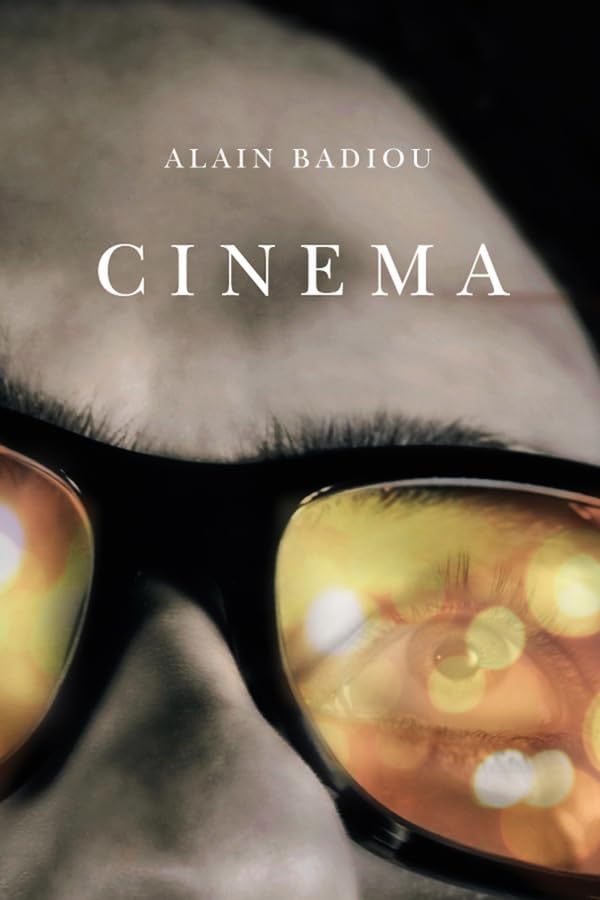
Cinema / Alain Badiou; texts selected and introduced by Antoine de Baecque.
Material type: TextLanguage: Eng Publication details: New York : Polity Press, 2013Description: 269 p.: 23 cmISBN:
 - 9780745655673
- 9780745655680
- PN 1994 B136c 2013
| Item type | Current library | Home library | Collection | Shelving location | Call number | Vol info | Copy number | Status | Barcode | |
|---|---|---|---|---|---|---|---|---|---|---|
 Libro
Libro
|
Biblioteca Juan Bosch | Biblioteca Juan Bosch | Humanidades | Humanidades (4to. Piso) | PN 1994 B136c 2013 (Browse shelf(Opens below)) | 1 | 1 | Available | 00000103493 |
Translated from the French.
"Cinema has given me so much" -- Cinematic culture -- Revisionist cinema -- Art and its criticism -- The suicide of Grace : Le Diable probablement -- A man who never gives in -- Is the orient an object for the western conscience? -- Reference points for cinema's second modernity -- The Demy affair -- Switzerland : cinema as interpretation -- Interrupted notes on the French comedy film -- Y a tellement de pays pour aller -- Restoring meaning to death and chance -- A private industry, cinema is also a private spectacle -- The false movements of cinema -- Can a film be spoken about? -- Notes on The last laugh -- "Thinking the emergence of the event" -- The divine comedy and The convent -- Surplus seeing : Histoire(s) du cinéma -- Considerations on the current state of cinema -- The cinematic capture of the sexes -- An unqualified affirmation of cinema's enduring power -- Passion, Jean-Luc Godard -- "Say yes to love, or else be lonely" : Magnolia -- Dialectics of the fable : The matrix -- Cinema as philosophical experimentation -- On cinema as a democratic emblem -- The end of a beginning : Tout va bien -- The dimensions of art : Forgiveness -- The perfection of the world, improbable yet possible.
For Alain Badiou, films think, and it is the task of the philosopher to transcribe that thinking. What is the subject to which the film gives expressive form? This is the question that lies at the heart of Badiouʹs account of cinema. He contends that cinema is an art form that bears witness to the Other and renders human presence visible, thus testifying to the universal value of human existence and human freedom.
There are no comments on this title.